
Experts said the slowdown could be attributed to adjustments leading to destocking and the offering of discounts by companies as the government ushered in the new indirect taxation system on July 1.

Foreign banks set the template in consumer banking in its infancy, but have almost vacated this booming space.

Experts say a large part of the expenditure in April was spent on heads such as creating infrastructure for testing capacity and procuring testing kits, among other things.

Barring rice, spices, iron ore and pharmaceuticals, all the remaining 26 key sectors registered negative growth in May. Imports too plunged 51 per cent to $22.2 billion in May.

Almost all infrastructure ministries continued spending on capex throughout the lockdown, even as the Centre tried to maintain some semblance of economic normalcy.

The government clarified that the majority of industrial establishments had reported nil production, and cautioned that the numbers should not be compared with those of previous months. "It is not appropriate to compare the IIP of April 2020 with that of earlier months, and users may like to observe the changes in the IIP in the following months," said the ministry of statistics & programme implementation.

Debt-ridden Reliance Capital ready to cede control in home finance - Blackstone, Carlyle, Brookfield, and Piramal group are in talks to buy a large stake in Reliance Home Finance.

RBI had on February 12, 2018 issued a circular saying that lenders have to provide for resolution plan within 180 days in case of large account of Rs 2,000 crore and above.

Exports rise for 8th month, albeit at lower pace

Govt squeezed capital expenditure, and also cut revenue expenditure, that does not go into creating assets, by 11% in H1

The states that witnessed high CPI-based inflation rates were Lakshadweep, Tripura, Odisha, Uttar Pradesh, Kerala, Madhya Pradesh, Puducherry, Tamil Nadu, Rajasthan, Manipur and Mizoram.
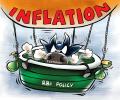
Currently, the retail inflation is well below the RBI's comfort level. The government has asked the central bank to keep inflation in the range of 4 per cent.

"Growth is expected to moderate gradually in China... pick up in India, and remain broadly stable in the Asean-5 region."

Economists, however, caution against interpreting the data as a broad-based revival

Economic affairs secretary S C Garg said that all macroeconomic parameters are performing well.

Depreciating the rupee against the dollar to boost economic growth has fiscal constraints and monetary limitations

Unlike bank FDs that are considered risk-free investments, NCDs do carry a certain amount of risk, primary among them is the risk of default, either servicing the interest payment or meeting their principal repayment obligations.
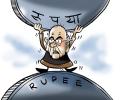
For the first eight months of the current financial year, the figure stood at Rs 7.17 trillion.

Import growth moderated to a four-month low, owing to sharp decline in that of gold.

September import growth was the second lowest this fiscal year, after the April growth figures of 4.6 per cent, bringing the trade deficit down to $13.98 billion

Growth was primarily pushed by a jump in steel and electricity generation, apart from a sustained rise in natural gas output.

While the farmers are not getting remunerative prices for their produce, at the same time they are forced to pay high prices for items they consume.

The immediate revenue loss could worsen the Centre's fiscal deficit, from the budgeted 3.3 per cent of gross domestic product (GDP) to 3.7 per cent of GDP -- a massive 40-basis-point increase. It was stabilised at 3.4 per cent since 2016-17, report Abhishek Waghmare and Dilasha Seth.

The internals of the food inflation are worrying, given a broad-based uptick across categories that tend to be sticky, such as proteins, and a narrower-than-expected reduction in inflation for vegetables.
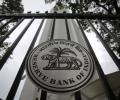
By no means do economists see the Reserve Bank of India stop at just a 25-bp cut. Some of the economists such as Soumyakanti Ghosh of State Bank of India are of the firm view that rates have room to fall by a total of 75 bps in the current financial year, starting with 25 bps in the August 7 policy.
Keep a close eye on credit quality, financials of NBFCs before investing. These instruments should not constitute more than 15 to 20 per cent of your debt portfolio.

Imports rise at highest pace in more than 2 years as crude oil price spikes.

Central bank moves to infuse liquidity into bond market to help boost sentiment.

Hardening prices of manufactured items during the month may refrain the Reserve Bank of India from cutting rates in its policy review on February 8.

Instead of a rate hike, or even a pause, there could be a window for the RBI for an interest rate cut

Despite the 6-month high, trade deficit has widened to a four-month high of $14.62 billion, as imports rose by 14.85 per cent during the month, reports Subhayan Chakraborty.
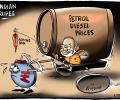
Retail inflation inches up to 3.77%; IIP growth dips to 3-month low

Home Minister Rajnath Singh said that the decision could cost the government roughly Rs 15,000 crore.

Rather, the existing ones should be implemented speedily to clean up the mess.

The central government's deposits with the RBI had fallen to just Rs 100 crore as of June 8.

A combination of externalities such as global trade wars and slowing growth, continuing glitches in accessing offsets under the GST regime, which has created a liquidity crunch for smaller exporters, and the growing competitiveness of smaller countries are causing the slowdown.

Most analysts expect the note ban to sharply hit GVA growth in Q3 and Q4, and the central bank's stance is being called into question.

With weekly additions slowing, it's likely that demand could be slackening

The services sector, which plays the biggest role in shaping the economy, is facing loads of issues currently. The largest segments, financial and real estate, are struggling to cope with bad debts and low demand for houses.

Much of the Q3 data will simply not be available for the CSO to factor in its calculation.
 © 2026 Rediff.com - Advertise with us - Disclaimer - Privacy Policy - Sitemap - Feedback - About us - Terms of use - Grievances